
Here is the article from my Washington stomping grounds by Cate Gable.
https://www.chinookobserver.com/opinion/columns/coast-chronicles-
michele-naquaiya-where-is-she-now/article_2fd86722-12b2-11e9-8cf5-67f84bba7c38.html

Here is the article from my Washington stomping grounds by Cate Gable.
https://www.chinookobserver.com/opinion/columns/coast-chronicles-
michele-naquaiya-where-is-she-now/article_2fd86722-12b2-11e9-8cf5-67f84bba7c38.html

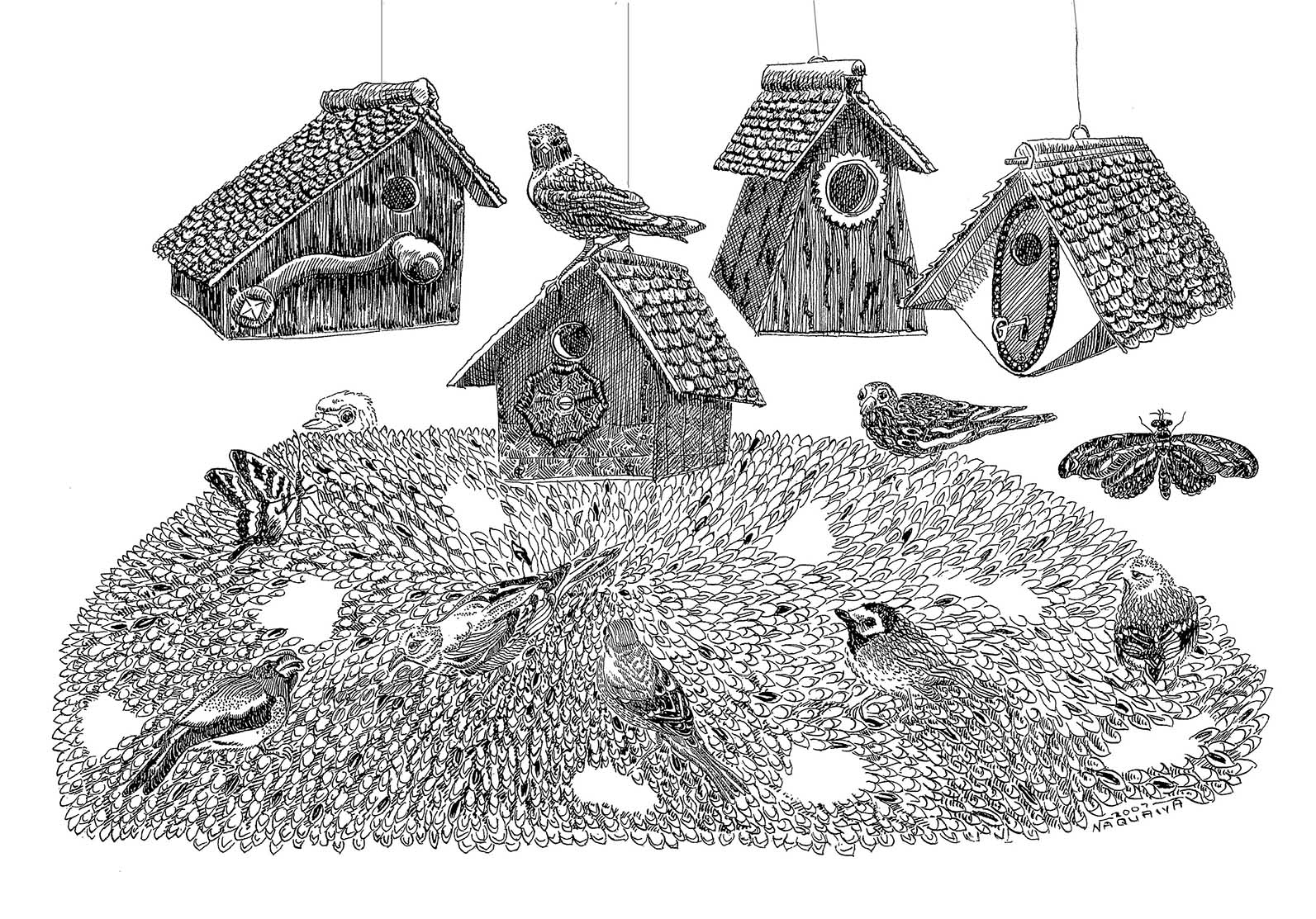
These birdhouses are made of recycled materials found in anybody’s garden shed. Whether wood or discarded metal fixtures or old roofing materials, the birds enjoy the shelter.
They are feeding on a gigantic sunflower center. I took a little artistic license with the scale of the seed pod…because I can. Moths and butterflies join in on the party.
The pen and ink is done in India Ink and an old fashioned crowquill pen nib. The original is drawn on Bristol board paper, and has been sold but read on to purchase the image on various mediums.
This artwork is available on my Red Bubble POD site. Click the picture to go there and purchase prints or accessories.
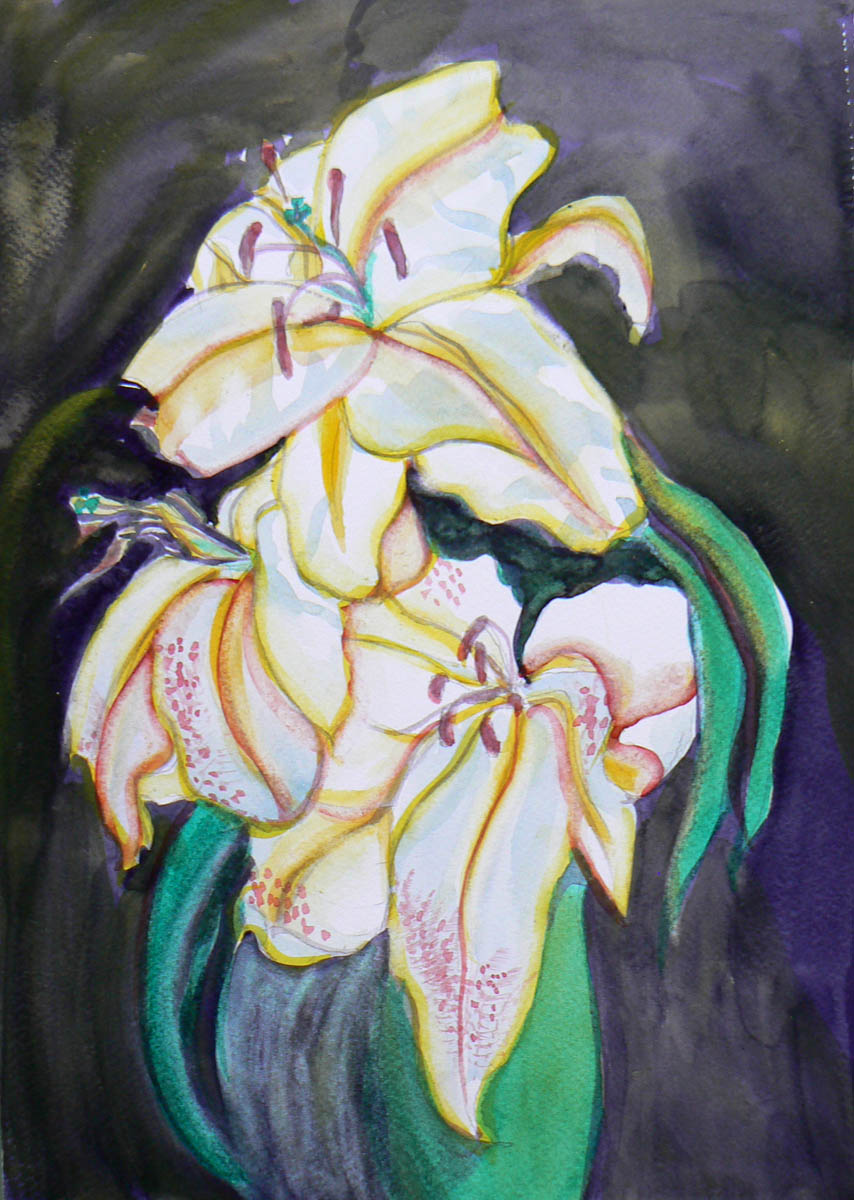
 Walking in downtown Ajijic, along a small crowded street, a shock of white caught my eye. It was coming from a dark doorway. I couldn’t make out what it was exactly so I stepped closer to get a better look. There were art objects in the doorway as well; a big earthenware bare brown jug with a minimum of decoration, as well as tables with sculptures and displayed paintings.
Then I saw the white of the lilies. I snapped some shots and felt privileged. I just loved them. They were dropping red pollen from their stamens onto the lower gigantic petals. They were on their last leg as cut flowers. I knew them as stargazer lilies. I had grown them in Washington. Mine were many colors of pinks, but I had never seen white ones like these. I looked up and saw a woman staring at me and smiling. Apparently I thought I was walking into an art gallery when in reality, I walked right into someone’s studio. I was embarrassed and apologized and stepped back quickly. She did not seem to mind.
I felt both silly and lucky at the same time.
Even though I have been in Mexico almost a year, I have not seen one calla lily yet. I have seen only a few backyard versions while walking in my neighborhood. They were shades of red and I noticed that they seemed happy in shady gardens.
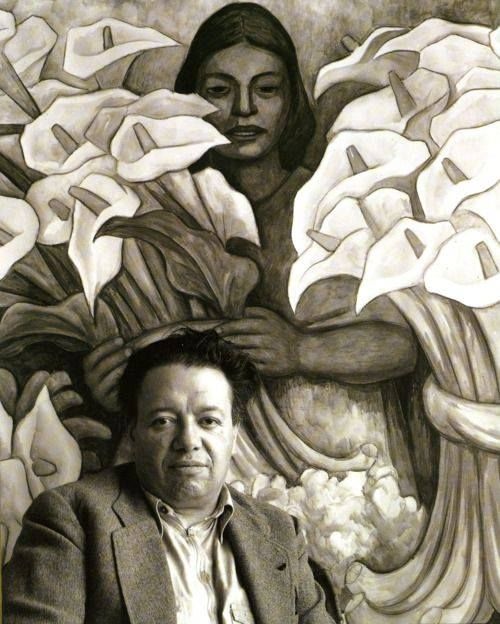
Diego Rivera painted many works using the calla lily. Even though we see these images over and over just about everywhere, I don’t get tired of them. He also painted them so well that he transformed from the well known flower into abstract shapes molded around his figures as perfect adornments. He found a perfect prop for his figures and faces.
Read about this iconic Mexican artist here:
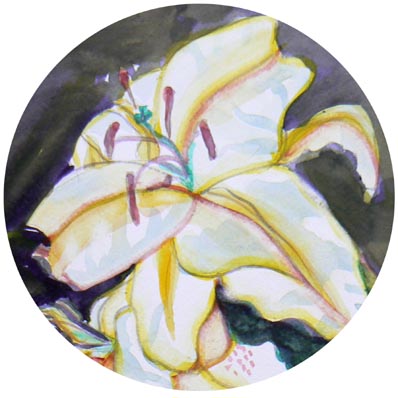
So lilies of all kinds have been on my painting list for a while. Here is what I painted today from my photo. The red grains are pollen. Click the picture to purchase a print.
If you would like to grow some of your own calla lilies, this is a good site for information.
To learn more about stargazer lillies…
Here’s a lovely little video of a bee collecting pollen. It’s relaxing and I’ve watched it a few times. Nature is amazing.
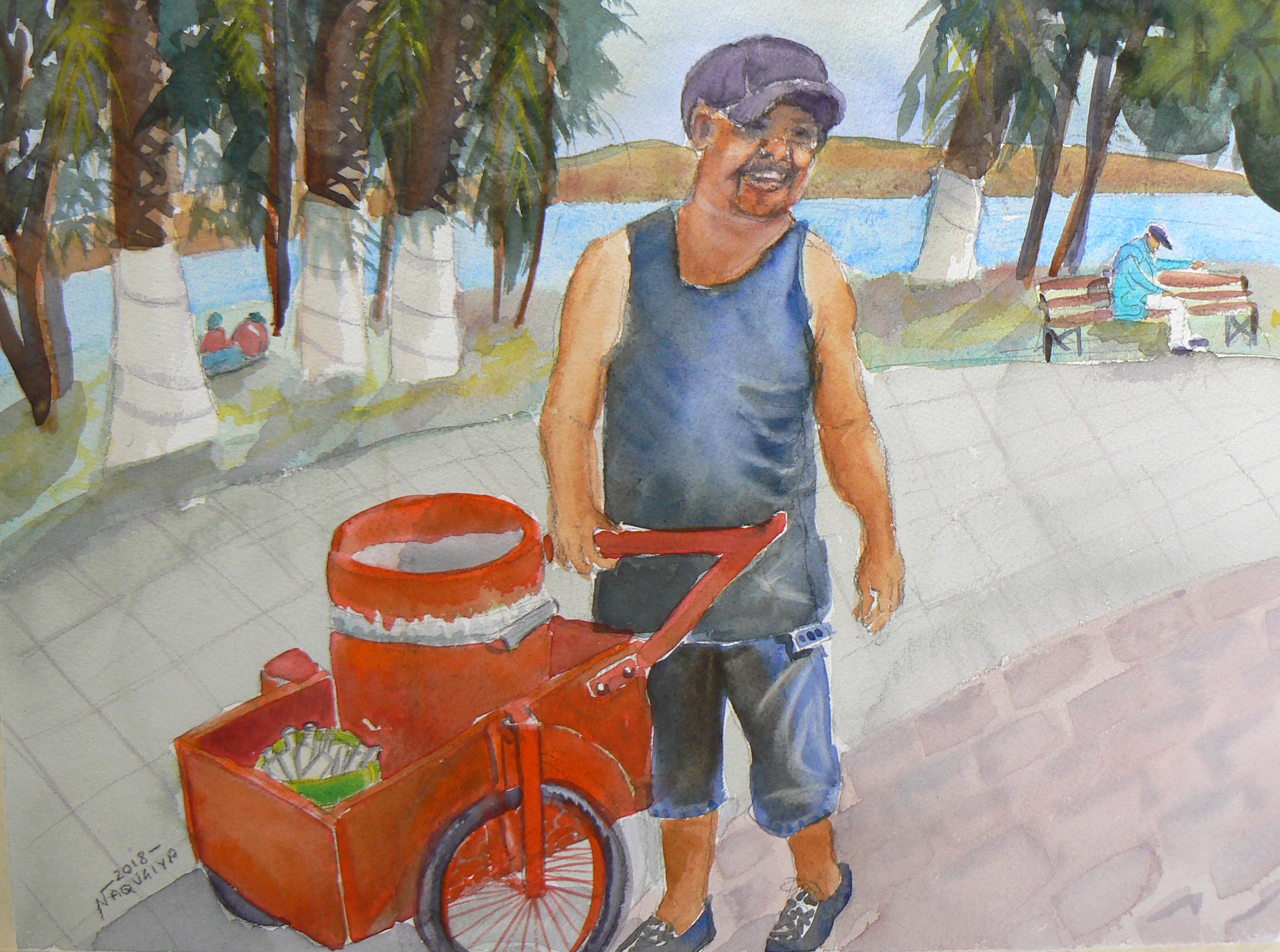
This wonderful happy man can be seen in the villlage of Chapala Mexico in the state of Jalisco. On weekends you can pretty much always find him pushing his tomato red cart. He sells ice cream, called helado in Spanish. He has lots of flavors to make you happy. The atmosphere is pleasant and the malecon (tiled walkway along the water’s edge) and the plaza are just lovely. The lake is beautiful and cools the air. Right now there has been so much rain that the lake is the highest its been in 50 years.
You can stroll and eat and take in all the sights and sounds. Very often you can find people dancing in the plaza to the music of local musicians. Some of the bands will be a collection of guitars, drums, and various brasses including tubas. Chapala is a great town. Some may call it a city. If it sounds like I am selling the place, I’m not really. I just enjoy it.
In Mexico they churn the ice cream by hand, in huge metal canisters called garrafas. The canisters are filled with the ice cream base and placed inside of wooden barrels full of ice and salt, and then it’s someone’s job to stir the ice cream with a large wooden paddle as it slowly freezes.
This technique gives the ice cream a unique texture. “Mexican ice cream is closer to gelato, as it has less fat and air than American style,”
When I saw this guy, I was immediately attracted to the cart and his infectious smile. I just had to paint him. happy happy happy.
If you are interested, click the picture to purchase a print or a textile of this watercolor.
Read more about making Ice Cream in Mexico here:
http://www.tastecooking.com/mexicanicecream
 Painting Mexico
You must be logged in to post a comment.